# Which model should I use?
In the [Graphical Configuration Page](Graphical-configuration), you can choose different models depending on your needs.
This wiki page tries to help you on which model to select.
For more technical/deeper explanations have a look on [Neural-Network-Types](https://github.com/jomjol/AI-on-the-edge-device/wiki/Neural-Network-Types).
## Digit Models
For digits on water meters, gas-meters or power meters you can select between two main types of models.
### dig-class11
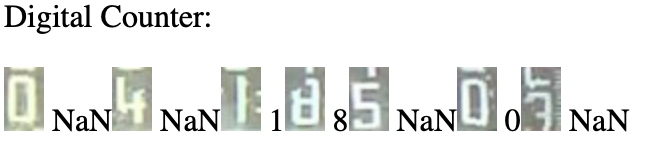
This model can recognize full digits. All intermediate states shown a "N" for not a number. But in post process it uses older values to fill up the "N" values if possible.
 #### Main features
* well suited for LCD digits
* with the ExtendedResolution option is not supported. (Only in conjunction with ana-class100 / ana-cont)
### dig-class100 / dig-cont
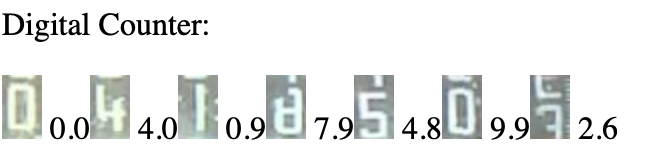
These models are used to get a continuous reading with intermediate states. To see what the models are doing, you can go to the Recognition page.
#### Main features
* well suited for LCD digits
* with the ExtendedResolution option is not supported. (Only in conjunction with ana-class100 / ana-cont)
### dig-class100 / dig-cont
These models are used to get a continuous reading with intermediate states. To see what the models are doing, you can go to the Recognition page.
 #### Main features
* suitable for all digit displays.
* Advantage over dig-class11 that results continue to be calculated in the transition between digits.
* With the ExtendedResolution option, higher accuracy is possible by adding another digit.
Look [here](https://jomjol.github.io/neural-network-digital-counter-readout) for a list of digit images used for the training
#### dig-class100 vs. dig-cont
The difference is in the internal processing. Take the one that gives you the best results.
## Analog pointer models
### ana-class100 / ana-cont
For pointers on water meters use the analog models. You can only choose between ana-class100 and ana-cont. Both do mainly the same.
#### Main features
* suitable for all digit displays.
* Advantage over dig-class11 that results continue to be calculated in the transition between digits.
* With the ExtendedResolution option, higher accuracy is possible by adding another digit.
Look [here](https://jomjol.github.io/neural-network-digital-counter-readout) for a list of digit images used for the training
#### dig-class100 vs. dig-cont
The difference is in the internal processing. Take the one that gives you the best results.
## Analog pointer models
### ana-class100 / ana-cont
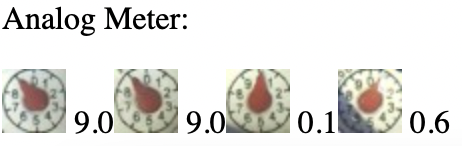
For pointers on water meters use the analog models. You can only choose between ana-class100 and ana-cont. Both do mainly the same.
 #### Main features
* for all analogue pointers, especially for water meters.
* With the ExtendedResolution option, higher accuracy is possible by adding another digit.
Look [here](https://jomjol.github.io/neural-network-analog-needle-readout/) for a list of pointer images used for the training
#### ana-class100 vs. ana-cont
The difference is in the internal processing. Take the one that gives you the best results. Both models learn from the same data.
#### Main features
* for all analogue pointers, especially for water meters.
* With the ExtendedResolution option, higher accuracy is possible by adding another digit.
Look [here](https://jomjol.github.io/neural-network-analog-needle-readout/) for a list of pointer images used for the training
#### ana-class100 vs. ana-cont
The difference is in the internal processing. Take the one that gives you the best results. Both models learn from the same data.